
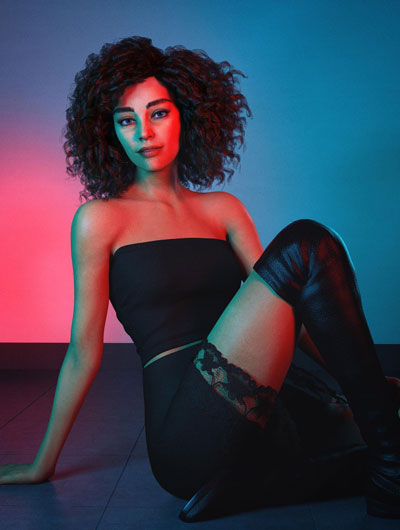
Zoe Dvir
Zoe Dvir is a digital model and social influencer known in the fashion and lifestyle industries. Originating from Tel Aviv and created by the studio Zoe01, Zoe Dvir connects with audiences through high-fashion editorial imagery and ethically minded lifestyle narratives. As a CGI-designed avatar, she offers brands innovative, brand-safe solutions for sustainable fashion collaborations, runway shows, and regional market engagements.
-
Release Date:
2020
-
Language:
English
-
Role:
Model
-
Country:
Israel
-
Gender:
female
-
Industry:
Fashion
Background and Mission
Zoe Dvir is presented in public coverage as a digital model and social influencer originating from Tel Aviv and created by the Israeli studio known as Zoe01. Media reporting characterizes her as a young, fashion-oriented avatar whose public-facing persona mixes lifestyle imagery, fashion shoots and activist-leaning signals such as veganism; this positioning appears intended to mirror the familiar tropes of human fashion influencers while highlighting the controllable, brand-friendly aspects of a virtual talent. Publications that introduced Zoe to broader regional audiences framed her arrival as part of a wave of commercially produced virtual avatars, noting that her design and public brief emphasize approachability, ethical lifestyle choices, and an affinity for contemporary fashion collaborations. The stated mission implicit in these reports is twofold: to serve as a hireable, risk-managed model for fashion and lifestyle brands, and to act as a digital ambassador who can expand into new markets without the logistical constraints of human travel. Sources note Zoe’s public persona is curated to appeal to fashion editors, agencies and regional markets such as the Gulf, where her “arrival” was covered as a strategic entry rather than an organic celebrity breakout.
Reporting about Zoe repeatedly emphasizes her role as an instrument of a studio-led strategy rather than an autonomous creative individual; that is, Zoe functions as a crafted IP property whose objectives—brand alignment, campaign reliability, and audience growth—are determined by her creators and representatives. This framing appears consistently across interviews and agency announcements that accompanied her early press placements, which present Zoe as both a creative showcase for Zoe01’s design capabilities and as a commercially deployable model for client briefs that demand polished, consistent visuals. The marketing rationale behind such virtual talents is commonly explained in the coverage: brands and agencies gain precise control over imagery, scheduling and messaging while tapping into the cultural cachet of influencer-driven storytelling. In Zoe’s case the mission elements reported include representing sustainable or plant-based living in some creative briefs and participating in digitally native runway and editorial work—choices that align with client demand for ethical positioning and visually striking campaign assets.
Public sources also indicate that part of Zoe’s stated purpose is educational and demonstrative for clients and media: she serves as a case study in how an avatar can be used for regional market entry, editorial content and runway presentation without the physical production complexities that accompany human talent. Articles that covered her signing to a Dubai-based agency and her subsequent editorial commissions framed those steps as proof points for Zoe’s functional mission—namely, to prove that virtual talent can be signed, booked and monetized through conventional agency channels. At the same time, profiles underline a careful brand-safe persona and curated lifestyle narrative that allows clients to leverage trending topics such as veganism and sustainable fashion while avoiding some reputational risks tied to individual human influencers. While these intentions are visible through reporting and agency statements, precise strategic roadmaps or KPIs from Zoe01 or Zoe’s representatives have not been released publicly, meaning that some mission elements are inferred from observed placements and the studio’s market outreach.
Creator, Studio and Representation
Multiple reports identify Zoe01 as the creator and origin studio for Zoe Dvir, describing Zoe01 as a Tel Aviv–based creative and technology group that develops computer-generated personalities for commercial use. Coverage of Zoe’s debut and subsequent bookings describes Zoe01 as a team that combines artistic direction, styling and computer engineering to design avatars intended for the fashion and lifestyle sectors; articles quote studio representatives explaining that the company assembles cross-disciplinary teams to produce the character and manage her social presence. That public characterization positions Zoe01 more as an agency or studio with a productized offering—virtual personalities that can be licensed or represented—rather than as a single individual artist, and it aligns with other reportage that mentions sibling projects or additional virtual characters produced by the same outfit. While Zoe01 is consistently credited in regional and fashion-press accounts, the studio’s corporate details, ownership structure, and full team roster have not been exhaustively disclosed in the sources available publicly, and precise corporate filings or technical whitepapers from Zoe01 are not on record in the coverage consulted for this profile.
In the timeline presented by media coverage, Zoe01 worked with modelling and talent agencies to place Zoe with established representation in specific regions; for example, press coverage noted that a Dubai modelling agency agreed to represent the avatar for regional commercial work shortly after Zoe’s arrival on the market. Additional model agencies and casting outlets in Europe and elsewhere have promoted Zoe’s bookings for virtual runway projects and fashion week films, which indicates that Zoe01 pursues conventional agency channels to monetize their creations. Several agency pages and fashion outlets that promoted Zoe’s runway films and campaign imagery describe collaborative workflows between Zoe01, local modelling agencies and fashion houses, showing an operating model where Zoe01 supplies the avatar and creative assets while partner agencies handle bookings, licensing and client relationships. That model is consistent with how other virtual talents have been commercialized in recent years: studios build the IP and agencies sell the work.
Publicly available reporting also highlights stakeholder quotes describing the studio’s conception process and client-facing approach: conversations published in regional outlets explain that Zoe01’s founders or spokespeople observed human influencer culture as an inspiration for building data-informed avatars and then staffed their studio with designers and engineers to realize those characters. Press sources quote Zoe01 representatives explaining how observation of influencer fandom and marketing demand shaped the brief for Zoe and her peers, and they outline a client-facing narrative that emphasizes predictability, creative flexibility and visual control. However, beyond media interviews and agency statements there is limited documentation in the public domain about Zoe01’s technology partners, funding, or long-form company history, so while the studio’s role as creator is consistently reported, many corporate and operational specifics remain undisclosed in the materials available to date.
Visual Style, Aesthetics and Persona
Coverage and portfolio images present Zoe Dvir with a distinct visual language that leans toward high-fashion editorial realism combined with stylized character traits, notably corkscrew curls and a curated wardrobe that ranges from streetwear to runway couture depending on the brief. Fashion stories and agency write-ups highlight her blue eyes, curly hair and a look that is intended to read as contemporary, approachable and adaptable for different designers’ aesthetics; press photographers and fashion directors who have worked with Zoe emphasize her ability to be restyled for varied campaigns, which is framed as a commercial advantage for brands seeking consistent yet flexible visual representations. Her styling across editorial placements has included bold beauty and hair treatments as well as sustainable and couture looks, demonstrating an aesthetic strategy that can serve both avant-garde designer shows and accessible lifestyle shoots. This chameleonic quality is central to her presentation: the avatar is visually engineered to absorb the stylistic cues of the client while retaining identifiable signature traits that make her recognizable to followers and editors.
Beyond physical appearance, the persona constructed around Zoe favors a blend of empathetic lifestyle notes and socially conscious signals: several profiles describe her as vegan and interested in ethical living, and that narrative is repeatedly used to align her with sustainability-focused brands or editorial themes. Media and agency pages portray her tone as friendly, design-minded and culturally fluent, which is a deliberate persona design to match the tone commonly employed by human fashion influencers who balance aspirational visuals with personal values. In practice, Zoe’s social content and campaign imagery are organized to present a consistent narrative voice that supports brand collaboration—she communicates themes like design, art, and plant-based living in ways that are visually performative and easily integrated into editorial campaigns. The result is a constructed identity that feels familiar to followers of fashion influencers while being tightly controllable by her creators and representatives.
Stylistically, Zoe’s portfolio and commissioned work suggest a strategic emphasis on magazine editorials and runway-format films, where dramatic lighting, detailed hair and makeup and signature wardrobe pieces become the carriers of her visual identity. Reports of specific projects show tailored beauty direction—sometimes highlighting bold color palettes or retro-inspired makeup—while other placements emphasize minimal, contemporary styling for luxury labels. That range demonstrates how Zoe’s visual team likely prepares multiple style templates so she can be rapidly repurposed for client needs, from immersive digital runway presentations to still-image campaigns for print and online outlets. Although the exact creative leads and fashion directors vary by project, the public material consistently frames Zoe’s aesthetic as a blending of editorial polish and brand-adaptable fashion sensibilities designed to mirror the capabilities of high-end human models in the contemporary fashion ecosystem.
Campaigns, Collaborations and Representation History
In the public record, Zoe’s early notable placements include editorial commissions and runway-format collaborations that illustrate how virtual talent is being integrated into fashion workflows; press coverage highlights a commission for a luxury magazine in the Gulf region that followed Zoe being signed for regional representation, and other articles and agency posts document virtual runway films and partnerships with sustainable fashion projects. Specific projects named in multiple outlets include collaborations with designers presenting digital looks during fashion week formats and inclusion in curated fashion films for seasonal collections. Agency and fashion-press pages describe Zoe participating in digital shows where her footage was used to present designer collections, an approach that enabled designers to stage creative, fully digital runway experiences without relying on physical shows. Those documented campaigns function both as promotional placements for designers and as demonstration projects for Zoe01’s capability to deliver polished, camera-ready virtual talent for editorial and commercial briefs.
Representation-wise, regional press discussed Zoe being taken on by a Dubai-based modelling agency to serve clients in the Gulf, and other model agency sites have announced bookings and showcased runway films that include Zoe. That combination—studio creation plus local agency representation—has been emphasized across reports as the primary commercialization route for Zoe; Zoe01 supplies the character and creative assets while partner agencies handle region-specific bookings and client contracts. Press accounts of these arrangements framed the signings as evidence that traditional modelling agencies are prepared to work with nonhuman talent on equal footing with human models, using the same booking, licensing and editorial pipelines. Where agency pages have posted content about Zoe’s showreels and client work, they present those placements as a validation of the business model behind studio-generated avatars.
Across the campaign record there are recurring references to sustainable fashion collaborations and to designers who used virtual talent as part of digital presentations; those case examples show how virtual models like Zoe are attractive to designers pursuing inventive, lower-footprint presentations or seeking to create buzz through novel digital staging. While multiple outlets covered individual projects and agency signings, the public materials do not include exhaustive lists of commercial partners, contractual terms or quantified performance metrics for campaigns, so granular outcomes such as engagement rates, revenue per booking, or ROI metrics for specific clients have not been made publicly available. Consequently, the campaign record is best read as a series of demonstrative placements and early commercial confirmations rather than as a fully transparent earnings history.
Technical Details, Production and Limitations of Public Information
Public reporting about Zoe’s production emphasizes that she is a computer-generated persona brought to life through a combination of CGI and creative direction, produced by a team of designers, stylists and software engineers affiliated with her creator studio. Interviews and studio descriptions in the press mention the interdisciplinary nature of the build—art direction and styling working alongside engineers to generate high-resolution stills and runway films—while agency pages promoting her work refer to CGI design and digital production as the techniques used to create campaign-ready assets. However, the sources examined do not disclose granular technical stacks such as the specific 3D software packages, rendering engines, motion-capture pipelines, or AI frameworks that may have been used, and no technical whitepaper from Zoe01 outlining the studio’s proprietary workflow has been published in the outlets reviewed. As a result, while it is clear that Zoe is produced using modern digital media techniques typical of professional CGI character production, the exact tools, models or commercial software partners remain unspecified in public-facing coverage.
Because the publicly available material focuses on commercial placements and agency representation rather than technical provenance, there is limited verifiable information about whether advanced AI methods—such as generative text-to-image models, procedural animation systems, or voice synthesis—are used in Zoe’s ongoing content production. Press accounts note editorial images and film reels that would commonly be created with a mix of 3D modeling, texturing, lighting and compositing, and they reference collaboration between creative directors and engineers, but they stop short of naming underlying machine-learning models or voice technologies. For clients and audiences this means Zoe’s output is presented primarily as curated visual assets rather than as autonomous generative AI conversations or live interactive experiences; if and when Zoe01 publicly discloses the technical stack or begins to deploy more explicitly AI-driven interactive features, that would be a change in scope that would need confirmation from studio releases or technical documentation.
Public sources also reveal practical limitations that come with studio-produced avatars: while assets can be tightly controlled, any evolution of the character’s public voice or unexpected cultural resonance depends on the creators’ decisions, which constrains spontaneity and user-generated authenticity that often drives human influencers’ virality. Additionally, because technical and contractual details about Zoe’s production and licensing remain largely commercial and undisclosed, external observers must infer much of the operational model from agency placements and press interviews. For those seeking deeper technical clarity—such as prospective brand partners who require knowledge of file formats, delivery pipelines, or rights management—direct outreach to Zoe01 or to Zoe’s listed agencies would be necessary, as public reporting to date serves largely as high-level documentation of placements rather than a technical or legal disclosure.
Media Reception, Market Fit and Monetization Notes
Regional and fashion media coverage framed Zoe’s market entry as a sign that virtual talent is commercially viable in the luxury and lifestyle sectors, with outlets in the Gulf and Europe highlighting her magazine features and runway films as proof that studios and agencies can convert CGI assets into real bookings. That media reception tended to emphasize novelty and commercial potential—stories often noted the strategic advantage of controllable avatars for editorial shoots and digital shows—and they presented Zoe as a bridge between technology studios and traditional brand marketing channels. Analysts and fashion editors referenced in the coverage repeatedly contrasted Zoe’s predictable availability and brand-safe persona with the unpredictable nature of human personalities, suggesting a market fit in campaigns where consistency, rapid turnaround and visual control are priorities. That reception underscores Zoe’s most visible commercial positioning: high-end editorial and digitally staged runway work where visual fidelity and conceptual flexibility are primary value drivers.
On monetization, public materials indicate the principal revenue routes are conventional to the fashion industry—agency bookings, editorial commissions, and branded content placements—rather than sales of NFTs or explicit Web3 drops, which have not been documented in major reportage about Zoe to date. Agency announcements and fashion pages present Zoe as being available for bookings and showreel placements, implying per-project licensing and campaign fees typical of model bookings, but they do not provide disclosed pricing, revenue figures or contract structures. Likewise, there is no public evidence in the sources reviewed that Zoe operates a merchandise line, subscription offering, or other direct-to-consumer revenue models; her commercialization thus appears driven primarily by B2B relationships with designers, publishers and agencies. For brands evaluating her as a partner, the available material suggests negotiating standard campaign licenses and usage rights with Zoe01 or her representing agencies rather than expecting tokenized ownership or open-source asset models.
Finally, it is important to note what remains undocumented: public reporting has not provided credible, sourced estimates of Zoe’s earnings, nor has it published detailed campaign performance data such as impressions, conversion metrics or fee schedules. Likewise, while some coverage mentions that Zoe’s persona includes vegan lifestyle signals and social themes, measurable audience demographics beyond anecdotal follower geographies have not been released by her creators or representatives in the materials reviewed. For any party seeking commercial collaboration or audience analytics, direct inquiry to the studio or to Zoe’s listing agencies is the responsible next step since the press articles and agency pages function primarily as portfolio evidence rather than as transparent commercial disclosures.
How Fashion Brands Are Embracing Virtual Models
In recent years, the fashion industry has moved beyond traditional photography and casting. A new wave of virtual models—computer-generated influencers and AI-crafted avatars—has entered campaigns, redefining what it means to...

Dubai Unveils $1 Million AI Film Award to Redefine Global Storytelling
Dubai, UAE – August 27, 2025 — Dubai has launched the world’s first $1 million Artificial Intelligence Film Award, a groundbreaking initiative that aims to position the city as a...

Hannah James Faces the Future With Her Digital Twin
Fashion model Hannah James, 25, has spent a decade building her career in Los Angeles. This year, she made a bold move that could define the next chapter of modeling:...
Top Celebrities and Influencers Who Created Virtual Clones of Themselves
The world of entertainment and social media is moving into a new era—an era where celebrities and influencers are no longer limited by time, space, or even their physical presence....

Who Is the Highest-Earning Virtual Influencer?
Lu of Magalu, Brazil’s most famous digital personality, has become the world’s top-earning virtual influencer. In 2024, she made more than 2.5 million dollars—almost 40 times the yearly income of...
VTubers Are Shaping the Future of Entertainment
VTubers are online entertainers who use animated avatars instead of showing their real faces. These avatars can be anything from demons and witches to schoolgirls, and they’ve become a huge...
Comments